PureLab UK provides specialist Histopathology services for a broad range of biopsy and surgical specimens. Our service supports end-to-end diagnostic pathways, routine and urgent referrals, and second opinions, with cases reported by pathologists with relevant subspecialist expertise.
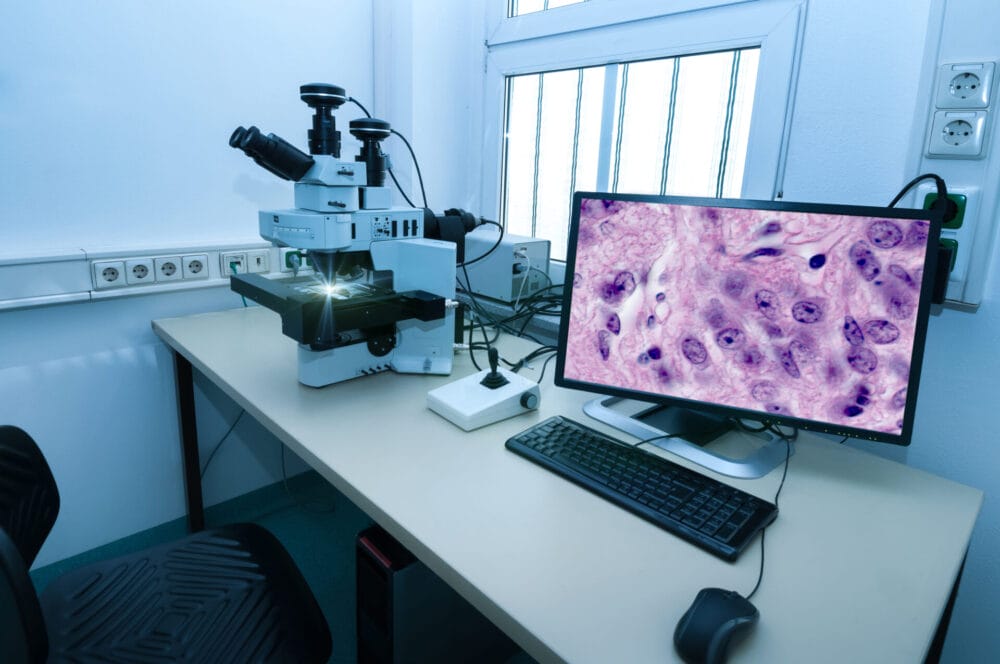
Our Histopathology service combines diagnostic expertise with access to supporting techniques including special stains, immunohistochemistry and specialist referral testing where required.
Subspecialist reporting
Our cellular pathology service is supported by a network of more than 50 pathologists across over 15 specialties. We have particular strengths in gastrointestinal, dermatopathology, gynaecological, urological and breast pathology, alongside subspecialist expertise including haematopathology, cardiothoracic and head and neck pathology.
This subspecialist approach enables cases to be directed to pathologists with appropriate expertise and supports access to clinical advice and case discussion where required.
Specialist Testing
PureLab UK performs a comprehensive range of special stains and immunohistochemistry in house to support histopathological diagnosis. Where additional specialist investigations are required, testing may be undertaken through approved referral laboratories.
Details of available testing can be found in our Histology Test Catalogue.
Frozen Sections
PureLab UK provides frozen section support for hospitals and clinics. Frozen section examination allows fresh tissue to be rapidly assessed during surgery, supporting the clinical team with information that may help guide the procedure, including assessment of surgical margins where appropriate.
Frozen section services require a minimum of 48 hours’ notice and should be arranged with the laboratory in advance. Please contact Customer Services to discuss requirements and availability.
Telephone: +44 20 7299 4490
Mohs Micrographic Surgery
PureLab UK provides medical, histopathology and technical support for Mohs micrographic surgery. Mohs surgery is a microscopically controlled surgical technique used in the treatment of selected skin cancers and enables detailed assessment of the peripheral and deep surgical margins during the procedure.
During Mohs surgery, tissue is removed from the tumour site and processed using frozen section techniques. The tissue is then examined microscopically to determine whether tumour remains at the surgical margins. Where residual tumour is identified, its location can be mapped so that further tissue can be removed specifically from the affected area. This process is repeated as required until the margins are clear.
The technique enables close control of the surgical margin while helping to minimise the removal of surrounding healthy tissue, which can be particularly important in anatomically sensitive areas.
In addition to providing experienced laboratory support for Mohs procedures, PureLab can assist clinics in developing and establishing Mohs services according to their individual requirements. Please contact Customer Services to discuss service setup, support arrangements and availability.
Expert and second-opinion reporting
Expert and second-opinion reporting is available across a range of histopathology specialties. Cases can be directed to pathologists with relevant subspecialist expertise according to the clinical requirements of the referral.
Please contact Customer Services for information on referring a case for expert or second-opinion review.
Digital Pathology
Digital pathology is an integral part of PureLab UK’s Histopathology service, with more than 90% of our pathologists validated to report digitally.
Digital pathology involves scanning glass slides to create high-resolution digital slide images that can be securely viewed and interpreted by appropriately validated pathologists. This supports flexible access to subspecialist expertise while maintaining traditional microscopy where appropriate.
PureLab uses both digital and conventional microscopy reporting methods according to the requirements of the case and the reporting pathologist.
Products of Conception
All fetal remains are managed respectfully and with dignity in accordance with applicable Human Tissue Authority guidance. Fetal tissue is not disposed of as clinical waste.
Appropriate consent for histological examination together with documentation of the patient’s wishes regarding the preferred method of disposal is required for all product of conception specimens.
Products of conception cannot be accepted without a POC consent form.